Artigos publicados - My published articles
Prof. Dr. Ricardo da Costa
Universidade Federal do Espírito Santo (Ufes) - Brasil

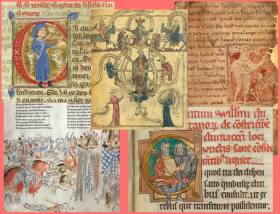
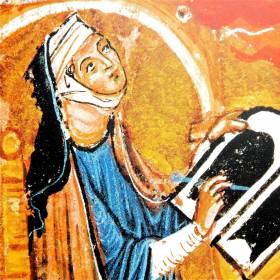
Representação de João, o Evangelista. Evangeliário de Lorsch (c. 810) - Roma (Biblioteca Apostolica Vaticana, Cod. Pal. Lat. 50, fol. 67v). Frontispício de página inteira do Renascimento Carolíngio.


Artigos (Articles) © by Ricardo da Costa © 1999. Todos os direitos reservados

Esta é a minha produção acadêmica. Concedo permissão para imprimir e copiar partes dos textos para uso pessoal, educativo e não comercial - por exemplo, em cursos de História e similares. Não concedo o direito de copiar todo o site ou partes dele para uso e/o distribuição comercial de nenhum tipo.

This is my academic production. All rights are reserved. Permission is granted to print out and copy portions of the texts for non-commercial personal and educational use - for example, in course packets. No permission is garanted for copying the entire site for commercial use or distribution in any form.


Artigos (Articles)

71. Não comete pecado mortal a dama que ama o cavaleiro leal”: a explosão do amor na imago medieval
(Patricia Grau-Dieckmann [ISPJVG], Nayhara Sepulcri [CNPq - Ufes] e Ricardo da Costa [Ufes]
)


70. “Então os cruzados começaram a profanar em nome do pendurado”. Maio sangrento: os pogroms perpetrados em 1096 pelo conde Emich II von Leiningen (†c. 1138) contra os judeus renanos, segundo as Crônicas Hebraicas e cristãs
(Ricardo da Costa [Ufes] e Wallace Hupp)

Artigo publicado em LAUAND, Jean (org.).
Filosofia e Educação – Volume 8. São Paulo: Editora SEMOrOc (Centro de Estudos Medievais Oriente & Ocidente da Faculdade de Educação da USP) – Factash Editora, 2008.


69. Os torneios medievais
(Ricardo da Costa [Ufes] e Adriana Zierer [Uema])

Artigo publicado
no Boletín Electrónico de la Sociedad Argentina de Estudios Medievales (
SAEMED), año II, n. 3, Abril/Julio de 2008 (ISSN 1851-3689).

Palestra proferida no III Congresso de História - Jornadas de História Antiga e Medieval, evento organizado pelo Centro Acadêmico de História da Universidade Federal de Juiz de Fora (UFJF), no dia 25 de outubro de 2006.


68. A Educação na Idade Média: a Retórica Nova (1301) de Ramon Llull
(Ricardo da Costa
)

Artigo publicado em LAUAND, Luiz Jean (coord.). Revista NOTANDUM, n. 16, Ano XI, jan-jun 2008, p. 29-38. Editora Mandruvá - Univ. do Porto (ISSN 1516-5477).

Palestra de encerramento da VI Jornada de Estudos Antigos e Medievais, evento organizado pelo Programa de Pós-Graduação em Educação da Universidade Estadual de Maringá entre os dias 03 e 05 de outubro de 2007.

Conferência proferida no I Encontro Internacional e II Nacional de História Antiga e Medieval do Maranhão – Rupturas, Transformações e Permanências: Sociedade e Imaginário, evento ocorrido entre os dias 13 e 16 de novembro de 2007.

Abstract: Daughter of the classical rhetoric and one of the seven liberal arts, the medieval Rhetoric incorporated in its categories a series of new concepts, strangers to classical authors, thanks to the Christian philosophical thought. Since Isidor of Sevilla (560-636) until Alcuin of York (c. 732-804) and Alan of Lille (1114-1203), all a pleiad of thinkers dedicated to rethink the Rhetoric in new values, many times with apologetic objectives. With his New Rhetoric (1301), Ramon Llull was one of last medieval thinker to bend over himself on the subject. Following Aristotle (“regarding truth and justice as the true bedding of the Rhetoric”) and Saint Augustin (“the coronation of all our workmanships is love”), Ramon refund the Rhetoric inserting it as one of his Art, to which he added charity as one of the main basis of the liberal arts, involving them in a completely Christian dimension. Thus, our proposal here is to analyze the last chapter of the New Rhetoric, “Of the Charity, where the philosopher displays proverbs and examples to show to the reader as well the rhetorician must decorate with Charity his words.


67. As Sagradas Escrituras orientam, educam e salvam: a educação monástica de Guiberto de Nogent (c.1055-1125)
(Carlile Lanzieri Júnior e Ricardo da Costa [Ufes])

Artigo publicado na Revista Ágora, Vitória, n. 6, 2007, p. 1-19 (ISSN 1980-0096).

Abstract: The article analyses aspects of the medieval monastic education in the XI century and the doubts raised by the teachers of that time about the use of texts from the pagan classical literature. As base of our analysis, we took of moralising testimony of the benedictine abbot Guibert of Nogent (c.1055-c.1125), who is in younghood lived the drama of to be tempted by the Ovidian poetry, something that almost put him out of his way to the wisdom and the meeting of the divine spirituality.


66. O conhecimento do homem no tempo é o conforto da História, mestra da vida
(Ricardo da Costa)

Prefácio do livro de Carlile LANZIERI JÚNIOR, A sabedoria de um monge medieval – as relações políticas e sociais nas memórias de Guiberto de Nogent (século XII), Juiz de Fora/MG, Editar, 2007, p. 11-13.


65. Duas imprecações medievais contra os advogados: as diatribes de São Bernardo de Claraval e Ramon Llull nas obras Da Consideração (c. 1149-1152) e O Livro das Maravilhas (1288-1289)
(Ricardo da Costa)

Palestra proferida no I Congresso Internacional de Estudos Históricos - Heranças Culturais do Medievo: O Direito e a Tradição Ibérica Medieval, evento organizado pela Fundação Universidade Federal do Rio Grande (FURG), no dia 14 de novembro de 2006.

Trabalho apresentado no VII EIEM - Encontro Internacional de Estudos Medievais, ocorrido na Universidade Federal do Ceará, entre os dias 03 e 06 de julho de 2007.


64. “O homem é mau quando age contra Deus e contra a semelhança de Deus”: a maldade humana no Livro das Maravilhas (1288-1289) de Ramon Llull
(Ricardo da Costa)

Trabalho apresentado no II Simpósio Internacional de Teologia e Ciências da Religião, "A Banalização do Mal", evento organizado pelo Programa de Pós-Graduação em Ciências da Religião da Pontifícia Universidade Católica de Minas Gerais, nos dias 02 a 04 de maio de 2007.

Artigo publicado em Anais do II Simpósio Internacional de Teologia e Ciências da Religião (ISSN 1981-285x - cd-rom), Belo Horizonte, ISTA/PUC Minas, 2007.

Abstract: Written in Paris by the philosopher Ramon Llull, Félix or The Book of Marvelous is the one of first novels of philosophical and social hallmark written in Europe. It’s a social criticism of reform, didatical and moral intention. His Book VIII is a large treatise about the man because, in the lulism philosophy, the man is the peak of the divine creation. There is one chapter in wich the protagonist of the novel – by name Felix – asks a question for hermit why the man is good or bad. In this moment the philosopher explains the nature of evil and, beyond the approach of the relationship between man and God, uses many alegorical and chain exemples that serve as literarical form to analogical thought of the author about this important metaphisical theme.


63. “Querer o bem para nós é próprio de Deus. Querer o mal só depende de nosso querer. Não querer o bem é totalmente diabólico”: São Bernardo de Claraval (1090-1153) e o mal na Idade Média
(Ricardo da Costa [Ufes] e Nayhara Sepulcri [CNPq - Ufes])

Trabalho apresentado no II Simpósio Internacional de Teologia e Ciências da Religião, "A Banalização do Mal", evento organizado pelo Programa de Pós-Graduação em Ciências da Religião da Pontifícia Universidade Católica de Minas Gerais, nos dias 02 a 04 de maio de 2007.

Artigo publicado em Anais do II Simpósio Internacional de Teologia e Ciências da Religião (ISSN 1981-285x - cd-rom), Belo Horizonte, ISTA/PUC Minas, 2007.

Abstract: Our propose is to present the Saint Bernard of Clairvaux´s vision about evil. The prominent Cistercian abbot was distinguished in XIIth century as the persuasive voice that battled against the enemies of the christian faith. We will approach especially his considerations in five extracts of his texts: two sermons (Sermon 32 and Sermon 71), two letters (Of the consideration, to Pope Eugênio III [1145-1153] and Letter 231, to the bishops of Óstia, Frascati and Palestrina), and a Sentence (extracted of the Third Series of Sentences). The writings of the doctor mellifluus, as he was known, provide us the apprehension of the evil’s meaning in the humanist medieval christian philosophy, in a time immersed in peculiar spirituals values that give the tone of this age.


62. “A donzela que não podia ouvir falar de foder” e “Da mulher a quem arrancaram os colhões”: dois fabliaux e as questões do corpo e da condição feminina na Idade Média (sécs. XIII-XIV)
(Ricardo da Costa [Ufes] e Nayhara Sepulcri [CNPq - Ufes])

Trabalho apresentado na IV Semana de Pesquisa em Letras, evento organizado pela Comissão Interna de Pesquisa e Pós-graduação do Departamento de Línguas e Letras da Ufes (31 de agosto a 5 de setembro de 2006).


Artigo publicado
em COSTA, Ricardo da (coord.). Mirabilia 6 - Revista Eletrônica de História Antiga e Medieval - Journal of Ancient and Medieval History - A educação e a cultura laica na Idade Média (ISSN 1676-5818), dezembro de 2006.


61. “E o rei entrou na cidade em uma grande procissão, com todos cantando Te Deum laudamus”: a conquista de Córdoba (1236) por Fernando III, o Santo (c. 1198-1252) e a expansão das fronteiras da cristandade ibérica medieval
(Ricardo da Costa)

Conferência de abertura da VI Semana de História da Universidade Federal de São João del-Rei (UFSJ), no dia 20 de novembro de 2006.

Conferência profe
rida no VI Encontro ANPUH-ES, na Ufes, no dia 8 de novembro de 2006.


60.
Las definiciones de las siete artes liberales y mecánicas en la obra de Ramon Llull
(Ricardo da Costa)

Artigo publicado em Revista Anales del Seminario de Historia de la Filosofía. Madrid: Publicaciones Universidad Complutense de Madrid (UCM), vol. 23 (2006), p. 131-164 (ISSN 0211-2337).

Este texto é parte do trabalho de pós-doutorado com bolsa de estudos da Agència de Gestió d'Ajuts Universitaris i de Recerca de la Generalitat de Catalunya (Espanha) e realizado na Universitat Internacional de Catalunya (Barcelona) em 2005.

Abstract: Being part of a post-doctoral research undertaken at the Universitat Internacional de Catalunya (Barcelona), kindly sponsored by a grant from the Generalitat de Catalunya, this article analyses the definitions and classifications pertaining to the seven liberal and mechanical arts, as presented in the following works of Ramón Lull: the Libre de contemplació en Déu (1274-1276), the Doctrina Pueril (c. 1274) and the Arbre de ciència (1295-1296).


59. História e Memória: a importância da preservação e da recordação do passado
(Ricardo da Costa)

Conferência
proferida no IV Congresso de História da Região dos Lagos “História e Memória”, evento organizado pela Universidade Veiga de Almeida - campus Cabo Frio, e ocorrido entre os dias 21 a 23 de setembro de 2006.

Conferência proferida no Seminário de Educação “Os desafios da Educação Contemporânea”, evento organizado pela Faculdade Estácio de Sá (campus de Jardim Camburi - Vitória) e ocorrido no dia 11 de agosto de 2007.

Artigo publicado em Sinais 2, vol. 1, outubro/2007. Vitória: Universidade Federal do Espírito Santo, Centro de Ciência Humanas e Naturais, p. 2-15 (ISSN 1981-3988).

Abstract: Our propose is present the medieval vision about Memory and your importance for Education through six authors: Augustine of Hippo, Alcuin of Yourk, John of Salisbury, Hug of Saint Victor, Saint Bernard of Clairvaux and Ramon Llull.


58. Ramon Llull e a Beleza, boa forma natural da ordenação divina
(Ricardo da Costa)

Artigo publicado na Revista Sofia 2006, número 1. Vitória: Edufes, 2006 (uma publicação do Departamento de Filosofia da Ufes).


57. Breve história da Tapeçaria de Bayeux (c. 1070-1080)
(Ricardo da Costa)

Texto preparado sob encomenda para a Exposição Permanente das Ciências Humanas intitulada "O castelo medieval e o feudalismo" na Estação Ciência da USP, organizada pelo grupo Medieval Brasil.


56. A morte na perspectiva de Santo Tomás de Aquino
(Ricardo da Costa [Ufes] e Sidney Silveira)

Artigo publicado em SOUZA, José Antônio de Camargo Rodrigues de (org.). Idade Média: tempo do mundo, tempo dos homens, tempo de Deus. Porto Alegre: EST Edições (Escola Superior de Teologia), 2006, p. 223-229 (ISBN 85-7517-165-8).


55. A criação da ciência universal: Ramon Llull e as premissas de sua Arte
(Ricardo da Costa)

Artigo publicado com o título "O trabalho pioneiro do espanhol Ramon Llull para sistematizar as ciências", em SANTIAGO, Homero (coord.). Discutindo Filosofia 3. São Paulo: Editora Escala, 2006.


54. A Taula de Sant Miquel (séc. XIII) do mestre de Soriguerola (Baixa Cerdanha - Catalunha)
(Ricardo da Costa [Ufes] e Carolina Bianchi)

Artigo publicado em CAVALCANTI, Carlos M. H. (dir.). História, imagem e narrativas. Rio de Janeiro: Revista Eletrônica, n. 2, ano 1, abril/2006 (ISSN 1808-9895).


53. A experiência religiosa e mística de Ramon Llull: a infinidade e a eternidade divinas no Livro da contemplação (c. 1274)
(Ricardo da Costa)

Artigo publicado em Scintilla - Revista de Filosofia e Mística Medieval. Curitiba: Faculdade de Filosofia de São Boaventura (FFSB), vol. 3, n. 1, janeiro/junho 2006, p. 107-133 (ISSN 1806-6526).


52. A cultura castreja (c. III a.C. - I d.C.): a longa tradição de resistência ibérica
(The culture of the “castros”: the long tradition of iberian resistance)
(Ricardo da Costa)

Artigo publicado na Revista Outros Tempos, São Luís, Universidade Estadual do Maranhão (UEMA), volume 3, 2006 (ISSN 1808-8031), p. 37-58.

Abstract: The relation between history and archaeology is discoursed in this article by the analysis of the Portuguese “castros”, fortresses created between III b.C. and I a.D. in the Portuguese territory. The work Geografia, by Strabo, was used to confront the archaeological data. The hypothesis about the ceramic and the familiar nucleus of the castros are analyzed since the study of one case: the Carvalhelho’s castro, in Trás-os-Montes, a region typically full of castros.


51. Corpo & alma, vida & morte na medicina ibérica medieval: o Regimento proveitoso contra a pestilência (c. 1496)
(Body & soul, life & death in the iberic medicine: the Regimento proveitoso contra a pestilência (c. 1496)
(Jorge Prata de Sousa e Ricardo da Costa [Ufes])

Artigo publicado
em História, Ciência, Saúde - Manguinhos. Rio de Janeiro: Casa de Oswaldo Cruz/Fundação Oswaldo Cruz, set.-dez. 2005, volume XII, número 3, p. 841-851 (ISSN 0104-5970) com o título Regimento proveitoso contra a pestilência (c. 1496) - uma apresentação.


50. O deambulatório dos anjos: o claustro do mosteiro de Sant Cugat del Vallès (Barcelona) e a vida cotidiana e monástica expressa em seus capitéis (séculos XII-XIII)
(Ricardo da Costa)

Artigo publicado em LAUAND, Luiz Jean (coord.). Revista MIRANDUM, n. 17, Ano X, 2006, p. 39-58. Co-edição CEMOrOc-USP IJI - Editora Mandruvá - Univ. do Porto (ISSN 1516-5124).

Conferência proferida no III Congresso de História da Região dos Lagos, "História e Imagem", evento organizado pela Universidade Veiga de Almeida - Campus Cabo Frio, no dia 17 de setembro de 2005.

10 fotos de Sant Cugat del Vallès tiradas durante meu pós-doutorado (2005)


49. O que é, de que é feita e porque existe? Definições lulianas no Livro da Alma Racional (1296)
(What is it, What this is made of and Why exist? Lulian's definitions in The Book of Rational Soul [1296])
(Ricardo da Costa)


Artigo publicado
em COSTA, Ricardo da, TÔRRES, Moisés Romanazzi e ZIERER, Adriana (dirs.). Mirabilia 5 - Revista Eletrônica de História Antiga e Medieval - Journal of Ancient and Medieval History (ISSN 1676-5818), dezembro de 2005.

Palestra
proferida no II Colóquio Internacional de Filosofia Medieval – Antropologia: Raimundo Lúlio e Tomás de Aquino, evento ocorrido no dia 21 de agosto de 2004 na UniLaSalle-RJ (Institutos Superiores La Salle) e promovido pelo Instituto Brasileiro de Filosofia e Ciência Raimundo Lúlio, pela Universidade Federal Fluminense (Uff) e pelo Seminário Arquidiocesano São José.


48.
Ramón Llull, la cruzada y las órdenes militares de caballería
(Ricardo da Costa)

Conferência proferida no Seminário "Cristianisme i l'Islam - el cas de Tortosa i Tartous a la Mediterrània", evento organizado pela Facultat de Ciències Jurídiques i Polítiques da Universitat Internacional de Catalunya (UIC), Barcelona, no dia 03 de outubro de 2005. Apoio: Agència de Gestió d'Ajuts i de Recerca de la Generalitat de Catalunya.

O texto desta conferência faz parte do trabalho de pós-doutorado "Ramón Llull y la Orden del Temple (Siglos XIII-XIV)", concluído e apresentado à Universitat Internacional de Catalunya (Barcelona) em 2004.


47. A meditatio mortis no Livro do Homem (1300) de Ramon Llull
(The meditatio mortis in The Book of Man [1300] by Ramon Llull)
(Ricardo da Costa)

Conferência proferida no Gabinete de Filosofia Medieval da Faculdade de Letras da Universidade do Porto (Portugal) no dia 20 de maio de 2005.


46. A noção de pecado e os sete pecados capitais no Livro das Maravilhas (1288-1289) de Ramon Llull
(The concept of sin and the seven capital sins in the Book of Marvelous [1288-1289] by Ramon Llull)
(Ricardo da Costa)

Artigo publicado em FILHO, Ruy de Oliveira Andrade (org.). Relações de poder, educação e cultura na Antigüidade e Idade Média. Estudos em Homenagem ao Professor Daniel Valle Ribeiro - I CIEAM - VII CEAM. Santana de Parnaíba, SP: Editora Solis, 2005, p. 425-432 (ISBN 85-9828-03-4).

Trabalho apresentado
no Seminário Internacional Os Pecados Capitais na Idade Média, evento organizado pelo GT de Estudos Medievais da Associação Nacional de História - Núcleo do Rio Grande do Sul (ANPUH-RS).


45. Polindo - Los Libros de Rocinante 16
(Ricardo da Costa)

Resenha publicada em Signum 7 - Revista da Abrem. Associação Brasileira de Estudos Medievais. São Paulo: USP, 2005, p. 327-336 (ISSN 1516-6295).


44.
Los inicios de la Orden del Temple según Guillermo de Tiro (c. 1127-1190) y Jacobo de Vitry (†1240)
(Ricardo da Costa)

Este artigo integra o projeto interinstitucional de pesquisa pós-doutoral intitulado "Ramon Llull y la Orden del Temple (Siglos XIII-XIV)", encomendado pelo Rotary Club Barcelona-Europa e coordenado pelo Prof. Dr. Josep Serrano i Daura, da Universitat Internacional de Catalunya

Trabalho apresentado na mesa-redonda "Relações de Poder e Movimentos Sociais" (Simpósio 3 - Relações de Poder e Movimentos Sociais) do V Encontro da ANPUH-ES, no dia 14 de dezembro de 2004, na Ufes.

Adendo: Reportagem para a Revista Planeta na Web.


43. Ramon Llull (1232-1316) e o diálogo inter-religioso: cristãos, judeus e muçulmanos na cultura ibérica medieval: O Livro do gentio e dos três sábios e a Vikuah de Nahmânides
(Ricardo da Costa [Ufes] e Jordi Pardo Pastor)

Trabalho apresentado no Simpósio "Religión, Mitos y Cosmovisión" (coord. Francisco Luis Pérez Expósito e Ricardo da Costa), no IX Congreso de la SOLAR - Sociedad Latinoamericana de Estudios sobre América Latina y el Caribe - A integração da diversidade racial e cultural do Novo Mundo, evento ocorrido na Universidade Estadual do Rio de Janeiro (UERJ), nos dias 22 a 26 de novembro de 2004.

Artigo publicado em LEMOS, Maria Teresa Toribio Brittes e LAURIA, Ronaldo Martins (org.). A integração da diversidade racial e cultural do Novo Mundo. Rio de Janeiro: UERJ, 2004 (cd-room) (ISBN 85-900104-9-X)


43. El Llibre del Gentil e dels tres savis (c. 1274-1276) de Ramon Llull i la Vikuah (c. 1264) de Nahmànides. Noves dades sobre la Disputa de Barcelona de 1263 i les reflexions lul.lianes
(Ricardo da Costa e Jordi Pardo Pastor)


42. O Espelho de Reis (1341-1344), do galego Álvaro Pais
(The Mirror of Kings [1341-1344] by Galician Álvaro Pais)
(Ricardo da Costa)

Artigo publicado em MALEVAL, Maria do Amparo Tavares (org.). Estudos galegos 4. Niterói: EdUFF, 2004, p. 185-198 (ISBN 85-228-0385-4).

Artigo também publicado no site MiniWeb Educação.


41. O Conto do Graal (c. 1179-1181) de Chrètien de Troyes e sua mitologia céltica
(The Grial tale [c. 1179-1181] of Chrètien of Troyes and his celtic mithology)
(Jordi Pardo Pastor e Ricardo da Costa [Ufes])

Trabalho apresentado no I Simpósio Nacional de Estudos Celtas e Germânicos, evento organizado pelo Grupo Brathair e ocorrido na UFRJ do dia 30 de agosto ao dia 02 de setembro de 2004.


40. A expansão árabe na África e os Impérios Negros de Gana, Mali e Songai (sécs. VII-XVI)
(The arab expansion in Africa and the Black Empire's of Ghana, Mali and Songhai - VII-XVI centuries)

Primeira parte (First part) - A expansão árabe (The arab expansion)

Segunda parte
(Second part) - The Black Empire's
(Ricardo da Costa)

Artigo publicado no cd-rom do curso de extensão 'História Afro-brasileira organizado pelo Núcleo de Educação Aberta e a Distância (Ne@ad) da Ufes (ISBN 85-88909-20-0 - módulo I).


39. O conhecimento histórico e a compreensão do passado: o historiador e a arqueologia das palavras
(The history acknowledgement and the compreension of the past: the historian and word's archaelogy)
(Ricardo da Costa)

Artigo publicado em ZIERER, Adriana (coord.). Revista Outros Tempos, São Luís, Universidade Estadual do Maranhão (UEMA), volume 1, 2004 (ISSN 1808-8031).

Palestra
proferida no dia 02 de abril de 2004 na mesa-redonda Hélio Oiticica do Seminário "A importância da teoria para a produção artística e cultural", evento organizado pelo Prof. William Golino, do Centro de Artes da UFES.

Publicado no site Tempo de Crítica - Grupo de Pesquisa em Arte Contemporânea - A importância da teoria para a produção artística e cultural.

Esse trabalho também foi apresentado na Mesa redonda "História e Literatura: cruzamentos interdisciplinares" no I Simpósio Nacional de Estudos Celtas e Germânicos, evento organizado pelo Grupo Brathair e ocorrido na UFRJ nos dias 30 de agosto a 02 de setembro de 2004.


38. Para que serve a História? Para nada...
(What's the study of History for? Nothing...)
(Ricardo da Costa)

Palestra proferida na Ufes em mesa-redonda no dia 27 de novembro de 2003 na cerimônia de início do segundo semestre letivo de 2003 do curso de História. Evento promovido pelo Centro Acadêmico dos Estudantes de História da Ufes.


Artigo publicado em OLIVEIRA, Marco A. M. de (org.). Guerras e Imigrações. Campo Grande: Editora da UFMS, 2004, p. 73-94 (ISBN 85-7613-023-8).


37. Love and Crime, Chastisement and Redemption in Glory in the Crusade of Reconquest: Alfonso VIII of Castile in the battles of Alarcos (1195) and Las Navas de Tolosa (1212)
Translated into English, from the original in Portuguese, by Miguel Alexandre de Araujo Neto, M. A. in Latin American Studies, University College, London (1992).


36. El fin de los templarios y de las cruzadas y el beato Ramon Llull
(The end of templars and the blessed Ramon Llull)
(Ricardo da Costa)

Conferência proferida no Rotary Club Sant Cugat (Barcelona) no dia 13/10/2003, para o projeto pós-doutoral e interinstitucional de pesquisa intitulado "Ramon Llull y el Temple", e coordenado pelo Prof. Dr. Josep Serrano i Daura, da Universitat Internacional de Catalunya.

Publicado em Celtiberia.net (proyecto ideado por Celia Heras y Silverio Cavia).


35. Cluny, Jerusalém celeste encarnada (séculos X-XII)
(Cluny, celestial Jerusalem incarned)
Primeira parte (First part) - Segunda parte (Second part)
(Ricardo da Costa)

Artigo publicado em Revista Mediaevalia. Textos e Estudos 21 (2002), p. 115-137 (ISSN 0872-0991). Publicação do Gabinete de Filosofia Medieval da Faculdade de Letras da Universidade do Porto e da Faculdade de Teologia da Universidade Católica Portuguesa. Distribuição: Fundação Eng. António de Almeida.

Trabalho apresentado no V Encontro Internacional de Estudos Medievais, evento organizado pela Associação Brasileira de Estudos Medievais (ABREM), e ocorrido na Universidade Federal da Bahia (UFBA), nos dias 2 a 4 de julho de 2003.


34. Codex Manesse: três iluminuras do Grande Livro de Canções manuscritas de Heidelberg (século XIII) - análise iconográfica. Terceira parte
(Codex Manesse: three illuminations by The Great Book of Heidelberg [XIII century] - iconographic analysis. Third part)
(Ricardo da Costa)

Artigo publicado em Brathair 3 (1), 2003, p. 31-36 (ISSN 1519-9053)

Abstract: Iconographic analyses of three iluminures contained in the Great Book of Manuscripts Songs of Heidelberg (XIII century). The chosen iluminures are: 1) Herzog Heinrich I von Anhalt (1170-1252), 2) Herzog Johann von Brabant (1252-1294) and 3) Graf Rudolf von Neuenburg (Rudolf II [1158-1192] or Rudolf I [1201-1258]).


33. Um espelho de príncipes artístico e profano: a representação das virtudes do Bom Governo e os vícios do Mau Governo nos afrescos de Ambrogio Lorenzetti (c. 1290-1348?) - análise iconográfica
(A artistic and secular Prince's Mirror: the representation of Good Goverment virtues and Bad Goverment vices in Ambrogio Lorenzetti frescoes - iconographic analysis)
(Ricardo da Costa)

Artigo publicado em Utopía y Praxis Latinoamericana - Revista Internacional de Filosofìa Iberoamericana y Teoría Social. Maracaibo (Venezuela): Universidad del Zulia, vol. 8, n. 23, octubre de 2003, p. 55-71 (ISSN 1315-5216).

Abstract: This article analyses some frescoes made by Ambrogio Lorenzetti making the hipothesis that they are Prince's Mirrors artistics and seculars. The showing of the virtues of the Good Government and the vices of tiranny as they appear in the frescoes of Lorenzetti is the materialization of the literary tradiction of the writings of the medievals Prince's Mirrors. A detailed description is made of the alegoric simbolism of the idea of the good government and of the vices it should avoid, so it wouldn't turn in a tiranny.


32. Entre a Pintura e a Poesia: o nascimento do Amor e a elevação da Condição Feminina na Idade Média
(Between paiting and portry: the birth of Love and the betterment of the feminine's condition in the Middle Ages)
(Priscilla Lauret Coutinho e Ricardo da Costa)

Artigo publicado em GUGLIELMI, Nilda (dir.). Apuntes sobre familia, matrimonio y sexualidad en la Edad Media. Colección Fuentes y Estudios Medievales 12. Mar del Plata: GIEM (Grupo de Investigaciones y Estudios Medievales), Universidad Nacional de Mar del Plata (UNMdP), diciembre de 2003, p. 4-28 (ISBN 987-544-029-9).


31. A Educação na Idade Média. A busca da Sabedoria como caminho para a Felicidade: Al-Farabi e Ramon Llull
(The Education in the Middle Ages: the search of Knowledge as a way to Happiness. Al-Farabi and Ramon Llull)
(Ricardo da Costa)

Artigo publicado em Dimensões - Revista de História da UFES 15. Dossiê História, Educação e Cidadania. Vitória: Ufes, Centro de Ciências Humanas e Naturais, EDUFES, 2003, p. 99-115 (ISSN 1517-2120).

Abstract: This article analyses the theme of medieval education by the view of his contemporaries. We have selected three philosophers - Al-Farabi and Ramon Llull - witch in their writings dealt with education as a human basic instrument to achieve the knowledgement, and from here to happiness, supreme good to be achieve.


30. Codex Manesse: três iluminuras do Grande Livro de Canções manuscritas de Heidelberg - (século XIII) - análise iconográfica. Segunda parte
(Codex Manesse: three illuminations by The Great Book of Heidelberg [XIII century] - iconographic analysis. Second part)
(Ricardo da Costa)

Artigo publicado em Brathair 2 (2), 2002: p. 09-16 (ISSN 1519-9053)

Abstract: Iconographic analyses of four iluminures contained in the Great Book of Manuscripts Songs of Heidelberg (XIII century). The chosen iluminures are: 1) König Conrad (1252-1268), 2) Markgraf Otto IV von Brandenburg (1266-1309) and 3) Markgraf Heinrich III von Meißen (1218-1288).


29. A Morte e as Representações do Além na Idade Média: Inferno e Paraíso na obra Doutrina para crianças (c. 1275) de Ramon Llull
(The Death and the Afterdeath in the Middle Ages: Hell and Heaven in Doctrine for children, by Ramon Llull)
(Ricardo da Costa)

Artigo Publicado nos Anais Eletrônicos do IV Encontro da ANPUH-ES - História, Representações e Narrativas. Vitória, 2003 (ISBN 85-903587-4-7).

Trabalho apresentado no dia 11 de dezembro de 2002 na Mesa Redonda “Para uma História das Representações: o Além e sua Geografia Imaginária na Idade Média”, do IV Encontro da ANPUH-ES (Associação Nacional de História - Núcleo Regional do Espírito Santo), “História, Representações e Narrativas”, UFES, Vitória, 11 a 13 de dezembro de 2002.


28. Reordenando o conhecimento: a Educação na Idade Média e o conceito de Ciência expresso na obra Doutrina para Crianças (c. 1274-1276) de Ramon Llull
(Reordening the knowledge: the Education in the Middle Ages and the concept of Science express in Doctrine for children)
(Ricardo da Costa)

Artigo publicado em OLIVEIRA, Terezinha (coord.). Anais Completos da II Jornada de Estudos Antigos e Medievais: Transformação Social e Educação. Universidade Estadual de Maringá, 2002, p. 17-28 (ISSN 1676-6733).

Palestra apresentada na "II Jornada de Estudos Antigos e Medievais: Transformação social e Educação", 10 e 11 de Outubro de 2002 - Universidade Estadual de Maringá (UEM)


27. Muçulmanos e Cristãos no diálogo luliano
(Muslims and cristians in the lulians dialogue)
(Ricardo da Costa)

Artigo publicado em Anales del Seminario de Historia de la Filosofía (UCM), vol. 19 (2002) p. 67-96 (ISSN 0211-2337), Universidad Complutense de Madrid.

Conferência proferida no Seminário Internacional Raimundo Lúlio e o Diálogo Inter-religioso, evento realizado pelo Instituto de Estudos Avançados da USP nos dias 18 e 19 de 2001 na USP-Oficina, São Paulo.

Abstract: This article intents to analyse the manner with which Ramon Llull dialogues with the muslims of his time. I will base this in his two travels to North Africa in 1293 and 1307. I will develop theme focusing on six points: 1) Historical context of the moments of his two travels and the missionary strategies of this time, 2) The Llullian dialogue based in his divines dignities, its similarity to the Sufis Islamic mystics hadras and his liturgical language, which certifies the meditation and contemplation of God, 3) The desire of martyrdom in his second travel to Africa and his changing of missionary strategies, 4) The three affirmations of Llullian thought that Ramon judges possible of acceptance by Juifs and Muslims, 5) The necessity of rational proof of the existance of the Holiest Trinity and the refusal of islamic doctrine in this catholic viewpoint based in Coranic texts, 6) A short comparison between his real debates in Africa and his proposal to convert the Muslims contained in his Book of Marvels.


26. Olhando para as estrelas, a fronteira imaginária final – Astronomia e Astrologia na Idade Média e a visão medieval do Cosmo
(Looking at the stars, the final imaginary border - Astronomy, Astrology and the medieval vision of Cosmos)
(Ricardo da Costa)

Artigo publicado em Dimensões - Revista de História da UFES 14. Dossiê Territórios, espaços e fronteiras. Vitória: Ufes, Centro de Ciências Humanas e Naturais, EDUFES, 2002, p. 481-501 (ISSN 1517-2120).


25. A Educação Infantil na Idade Média
(The childish education in the Middle Ages)
(Ricardo da Costa)

Artigo publicado em LAUAND, Luiz Jean (coord.). Revista VIDETUR 17 (ISSN 1516-5450). Porto: Editora Mandruvá/Faculdade de Educação da USP - Departamento de Filosofia e Ciências da Educação/Projeto Universidades Renovadas e Universidade do Porto - Faculdade de Direito - Instituto Jurídico Interdisciplinar, 2002, p. 13-20. Este artigo é somente a primeira parte do artigo 28.


24. Entre o real e o imaginado. Prolongamentos apocalípticos angélicos na tradição filosófica medieval: Ramon Llull e o Livro dos Anjos (1274-1283)
(Between the Real and the Imagined. Apocalyptical Prolongations in the Medieval Philosophical Tradition: Ramon Llull and the Book of the Angels)
(Ricardo da Costa [Ufes] e Eliane Ventorim)

Artigo publicado em Estudos de Religião 23. Revista Semestral de Estudos e Pesquisas em Religião. São Bernardo do Campo: UMESP, 2002, Ano XVI, n. 23, dezembro de 2002 (ISSN 0103-801X).

Conferência
proferida no IV Seminário de Apocalíptica "Experiência Visionária, Expectativas Messiânicas e História da Recepção" - UMESP - Universidade Metodista de São Paulo (São Bernardo do Campo), evento organizado pelo curso de Pós-graduação em Ciências da Religião nos dias 21, 22 e 23 de agosto de 2002. Apoio FAPESP.


23. A Questão Palestina e o Estado de Israel
(The Palestine question and the Israel State)
(Ricardo da Costa)

Palestra proferida no dia 09 de agosto de 2002 no curso de Relações Internacionais no Centro Universitário Vila Velha, a convite da Diretoria de Extensão e Seqüenciais
.


22. Revoltas camponesas na Idade Média. 1358: a violência da Jacquerie na visão de Jean Froissart
(Peasant's Rebellions in the Middle Ages. 1358. The violence of Jacquerie in Jean Froissart vision)
(Ricardo da Costa)

Artigo publicado em CHEVITARESE, André (org.). O campesinato na História (ISBN 85-7316-272-4). Rio de Janeiro: Relume Dumará / FAPERJ, 2002, p. 97-115.

Artigo também publicado no site MiniWeb Educação.

Abstract: The article is about the Jacquerie in the work of Jean Froissart. The first part of the article is about the concept of peasant, the phases of the histoy of the peasants' rebelions in the Middle Age. Two previous moments to the Jacquerie: 1) A peasant's rebelion in Normandie, in 996, described by Robert Wace, 2) A dialogue between a feudal lord and a slave in the Anglo-saxonic England, showing the gradual raise of the social confrontation. To the analysis and factual description of the Jacquerie, a lexicographic analysis of the Chronicle of Froissart was made. In the end of the article I tried to answer six questions considered essencial to the broach of the peoples's movement: Its spontaneity, its motivation, internal structure, reations of the others social groups, geographical extention and its consequences.


21. A novela na Idade Média: O Livro das Maravilhas (1288-1289) de Ramon Llull
(The Book of Marvelous by Ramon Llull: the novel in the Middle Ages)
(Ricardo da Costa)

Artigo publicado no site MiniWeb Educação.


20. A mentalidade de cruzada em Portugal (séculos XII-XIV)
(The mentality of crusade in Portugal XII-XIV century's)
(Ricardo da Costa)

Artigo publicado em Estudos sobre a Idade Média Peninsular. Anos 90 - Revista do Programa de Pós-Graduação em História da UFRGS. Porto Alegre: Universidade Federal do Rio Grande do Sul (UFRGS), n. 16, 2001-2002, p. 143-178 (ISSN 0104-236X).

Abstract: The central hipothesis developed in this article affirms that, between the Lisbon Conquest (1147) and the Salado's Battle (1340) a crusaders mentality was present in the portuguese nobility, spreaded by the Order of the Hospital of Saint John of Jerusalem, that confered a holy character to the reconquest process. The two battles were analysed with the lexicographic method. The Salado's Battle was considered the utmost of the crusaders mentality in Portugal. The christological relic used to link the two happenings was the Cross of the Saint Lenho of Marmelar, present in the two battles.


19. A violência da cavalaria medieval e o processo civilizador dos oratores
(The violence of medieval chivalry and the oratores civilizing process)
(Ricardo da Costa)

Artigo publicado em DIMENSÕES 13 - Revista de História da UFES. Dossiê Autoritarismo, Repressão, Memória. Vitória: Ufes, Jul/Dez 2001, p. 174-186 (ISSN 1517-2120).

Esse texto é a primeira parte do artigo 13, traduzido para o espanhol e publicado em FIDORA, A. e HIGUERA, J. G. (eds.) Ramon Llul caballero de la fe. Cuadernos de Anuário Filosófico – Série de Pensamiento Español. Pamplona: Universidad de Navarra, 2001, p. 13-40.


18. Maiorca e Aragão no tempo de Ramon Llull (1250-1300)
(Maiorca and Aragão in the time of Ramon Llull [1250-1300])
(Ricardo da Costa)


Artigo publicado
em COSTA, Ricardo da, TÔRRES, Moisés Romanazzi e ZIERER, Adriana (dirs.). Mirabilia 1. Revista Eletrônica de História Antiga e Medieval (ISSN 1676-5818), dezembro de 2001.

Abstract: Description and analysis of the political situation of the kingdons of Maiorca and Aragon in Ramon Llull's time, with enphasis in the relationship of Llull with the kings James II of Maiorca and Peter III of Aragon. This description has for an objective the compreension of the historical circunstances that influenced the political thoughts of Ramon Llull.


17. A ética da polaridade de Ramon Llull (1232-1316): o conhecimento necessário dos vícios e virtudes para o bom cumprimento do corpo social
(The Ramon Llull's ethic of polarity: the necessary knowledge of vices and virtues to good attainment of social body)
(Ricardo da Costa)

Artigo publicado em COSTA, Marcos Roberto N. e DE BONI, Luis A. (orgs.). A Ética Medieval face aos desafios da contemporaneidade. Porto Alegre: EDIPUCRS, 2004, p. 487-502 (ISBN 85-7430-496-4)

Trabalho apresentado no VIII Congresso Internacional de Filosofia Medieval em comemoração aos 20 anos da Comissão Brasileira de Filosofia Medieval. Organização: Universidade Católica de Pernambuco - Instituto Salesiano de Filosofia e Círculo Católico de Pernambuco. Recife, 23 a 26 de outubro de 2001.

Resumo: Que soluções a ética medieval pode oferecer à contemporaneidade? Este artigo tenta responder a essa questão analisando a ética teológico-política proposta pelo filósofo Ramon Llull (1232-1316) e baseada essencialmente na primeira noção aristotélica, que privilegia as virtudes, provocando inicialmente um sentimento de realização pessoal àquele que age - no caso o príncipe cristão - e tendo como conseqüência um benefício para a sociedade em que o mesmo vive. Para Llull, o conhecimento das virtudes seria um fundamento ético básico para a busca da felicidade, individual e conseqüentemente coletiva. Para tratar do tema dos vícios e virtudes lulianas, o artigo baseou-se essencialmente na obra Félix ou o Livro das Maravilhas, obra enciclopédica escrita em Paris nos anos 1288-1289, e também no Livro da Ordem de Cavalaria (c. 1275), na Árvore Imperial (1295-1296) e no Livro dos Mil Provérbios (1302).


16. Visões do apocalipse anglo-saxão na Destruição Britânica e sua Conquista (c. 540), de S. Gildas
(Visions of anglo-saxon apocalypse in Britanic destruction and his conquest, by Saint Gildas)
(Ricardo da Costa [Ufes] e Bruno Oliveira)

Artigo publicado em Brathair, 1 (2), 2001: p. 19-41 (ISSN 1519-9053)

Abstract: This article analyses the work British Destruction of the british monk Gildas, writen in the 540 years a.D. We brought out the passages that the author advices the british chiefs to supplant their weaknesses and their governamental incapacities due to their vices. To Gildas these chiefs were tyrants and the main responsible for the british defeat from the invasions. We also brought out the critics that Gildas made of the clerics of his time, probably influenced by the Irish monkship. To complete the historical research we took one work of Tacito (Life of Julio Agrícola), Beda (Historical Works), Nennius (History of Britons) and The Anglo Saxon Chronicle, writen in the time of the king Alfred, the Great. The article is divided in six parts: the common caracteristics of the german kingdoms, the invasion of the Brittain – with a brief description of the germanic migrations and the settlement of the angles, saxons and juts, the new social structures – specially the changing of the Sippe, the cristianization of England – with the return of the paganism and the works of conversion of Augustine, and a brief biography of Gildas.


15. Por uma geografia mitológica: a lenda medieval do Preste João, sua permanência, transferência e “morte”
(One mythological geographic: Father's John medieval legend, his permanence, transference and death)
(Ricardo da Costa)

Artigo publicado em História 9. Revista do Departamento de História da UFES. Vitória: Ufes, Centro de Ciências Humanas e Naturais, EDUFES, 2001, p. 53-64 (ISSN 1517-2120).

Abstract: This article is about the springing of the myth of Preste João, and his wonderfull kingdom and how did the legend, between XII and XIV centuries, transferred geographically the localization of this perfect kingdom from Asia to Africa, until the death of the myth by the father and chaplain Francisco Alvares, in 1520.


14. Codex Manesse: quatro iluminuras do Grande Livro de Canções manuscritas de Heidelberg (século XIII) - análise iconográfica. Primeira parte
(Codex Manesse: four illuminations by The Great Book of Heidelberg [XIII century] - iconographic analysis. First part)
(Ricardo da Costa [Ufes] e Alyne dos Santos Gonçalves)

Artigo publicado em LEÃO, Ângela, e BITTENCOURT, Vanda O. (orgs.). Anais do IV Encontro Internacional de Estudos Medievais - IV EIEM. Belo Horizonte: PUC Minas, 2003, p. 266-277.

Também publicado em Brathair 1 (1), 2001: p. 03-12 (ISSN 1519-9053)

Abstract: Iconographic analyses of four iluminures contained in the Great Book of Manuscripts Songs of Heidelberg. The articles begins with a short description of the political situation of the Germany Empire on the second half of the XIII century. Aftewards it describes the book organization and the characteristics of the artists. The chosen iluminures are: 1) The Kaiser Heinrich VI, traditionaly represented in his throne, 2) King Tyro of Schoffen, a scene where the father advises his son of the best way to the well government, 3) King Wenzell, showed in a scene of Royal Court, sorrounded by employeds, knights, musicians and servants. The scene means the praise of the prince, and 4) Duke Heinrich of Breslau. The scene shows the duke as the triunphant winner of a military campaing, sorrounded by a multitude of musicians and knights. The duke receives the victory's laurel by the hands of a lady, what simbolises the medieval courtly love.


13. Entre o Realismo e o Interpretismo: uma proposta alternativa de teoria histórica
(Between Realism and Historic interpretation: a new purpose of historic theory)
(Ricardo da Costa)


12. A cavalaria perfeita e as virtudes do bom cavaleiro no Livro da Ordem de Cavalaria (1275), de Ramon Llull
Primeira Parte (First Part)
Segunda Parte (Second Part)

(The perfect chivalry and the virtues of good knight in The Book of Chivalry Order, by Ramon Llull)
(Ricardo da Costa)

Artigo traduzido para o espanhol e publicado em FIDORA, A. e HIGUERA, J. G. (eds.) Ramon Llull caballero de la fe. Cuadernos de Anuário Filosófico – Série de Pensamiento Español. Pamplona: Universidad de Navarra, 2001, p. 13-40.

Conferência proferida na UFRJ no dia 14.03.2001, a convite do Programa de Estudos Medievais da UFRJ (PEM) e na UERJ no dia 09.04.2001, a convite do Depto. de Letras.

Abstract: This article analyses the theme of the virtues (teologals and cardinals) and the vices (the seven capital sins), developed by Ramon Llull in his Book of Chivalry Order. The first part begins with a historical reconstitution of the origins of the chivalry. Since the definition of the word "miles" and the cerimony of the knight's initiation (adoubement) to the problem of the privates wars (fedhe) and the efforts of the oratores to civilize the knights and to dominate their aggressive pulsions with the Peace of God and the Truce of God. From reality to utopia. In the second part I try to analyse the virtues of good knight descripts in The Book of Chivalry Order, by Ramon Llull. My basic question is: how and why this philosopher contrast the virtues with the vices for his utopian chivalry order? What is necessary to reform the chivalry order in the Llull's opinion? My article try to answer these questions.


11. Vida de Macrina: santidade, virgindade e ascetismo feminino cristão na Ásia Menor do século IV
(Life of Macrina: sanctity, virginity and a female ascetism cristian in the Asia Minor - IV century)
(Ricardo da Costa [Ufes] e Adriana Zierer [Uema])

Artigo publicado em REVISTA PHOÎNIX 7. Rio de Janeiro: 7Letras, 2001, p. 355-370 (ISSN 1413-5787).

Abstract: This paper intends to analyse the concept of santity, feminine ascetism and the importance of virginity to Christianism in the fourth century. In Life of Macrina, written by her brother Gregory of Nyssa, We can see the saint through the eyes of a man and her role in early Christianism in Capadocia, Asia Minor. He tells her influence over her brothers, three of which are known to be the capadocian fathers: Basil of Cesarea, Gregory of Nyssa and Peter of Sebastea. All of them fought against arianism. Macrina had great importance to lead her brothers to christian faith, her role as a virgin helped to mantain the purity of christianism at her time since her great knowlegde was based in the Sriptures and the in witings of the Church Fathers. She also created a convent which has greatly influenced Basil, who is the father of oriental monasticism. Also, we can see in Gregory’s work other aspects that contributed to her santity: her miracles. It is also very relevant Macrina’s relationship with her mother Emelia, who also joined her in the convent.


Artigo publicado em Revista Conciencia. Revista de expresión de estudiantes de Historia y Ciencias Sociales. México, Año 2, Número 6, Agosto de 2001.

Resumen: Este texto pretende analizar el concepto de santidad, ascetismo femenino y la importancia de la virginidad para el Cristianismo del siglo IV. En la Vida de Macrina, escrita por su hermano Gregorio de Nisa, podemos ver a la santa a través de los ojos de un hombre y su papel en el início del Cristianismo en Capadocia, Asia Menor. Él relata la influencia de la santa sobre los hermanos, tres de ellos conocidos como los padres de Capadocia: Basilio de Cesarea, Gregorio de Nisa y Pedro de Sebaste. Todos ellos lucharon contra el arrianismo. Macrina tuvo gran importancia al llevar la fé cristiana a sus hermanos, su papel como virgen ayudó a mantener la pureza del Cristianismo en su época, pués su gran conocimiento era basado en las escrituras y en las obras de los Padres de la Igresia. Ella también creó un convento que influenció profundamente a Basilio, que es el Padre del Monasticismo Oriental. Además de esto, podemos ver en la obra de Gregorio, otros aspectos que contribuyeron para la santidad de Macrina: sus milagros. También es muy relevante la relación de Macrina con su madre Emélia, la cual también se unió a ella en el convento.


10. Boécio e Ramon Llull: a Roda da Fortuna, princípio e fim dos homens
(Boecio and Ramon Llull: the Wheel of Fortune, begining and end of men)
(Ricardo da Costa [Ufes] e Adriana Zierer [Uema])

Artigo publicado em Revista Convenit Internacional 5 (Editora Mandruvá) (ISSN 1517-6975). Herausgegeben vom Forschungsprojekt Die Umbrüche in der Wissenskultur des 12. und 13. Jahrhunderts. Johann Wolfgang Goethe-Universität Frankfurt am Main - 2000. Editors ad hoc of Convenit 5: Alexander Fidora e Andreas Niederberger.

Abstract: The image of the Wheel of Fortune in the idea of the filosopher Ramon Llull is the result of the reception that the medieval age of the work The filosophy's consolation, by Boecio. Although, Llull contrary to Boecio, uses the metaphore of the Fortune in the application of his Ars, that the men should care about the salvation of their souls, and not about the material goods. To Llull, the Fortune is an Accident, not a Substance. The example of the Wheel of Fortune is important to show the fleeting time of the World in opposition to the Godly time.


09. O pensamento político no final do século XIII: a imagem do Príncipe Tirano na Árvore Imperial, de Ramon Llull
(Political thought in the end of thirteen century: the Tyrant Prince in Imperial Tree, by Ramon Llull)
(Ricardo da Costa)

Artigo publicado em PROYECTO ARJÉ. Comunidade internacional de Filosofía. Montevideo, Uruguay, 2002.

Também publicado em:

1) Dimensões 11 - Revista de História da Ufes. Dossiê (Des) Caminhos da Colonização. Vitória: Ufes, Centro de Ciências Humanas e Naturais, 2000, p. 349-364 (ISSN 1517-2120) e

2) Anais Eletrônicos do III Encontro da ANPUH-ES - (Des)Caminhos da Colonização. Vitória, 2001 (ISBN 85-903587-5-5).


08. Ramon Llull (1232-1316) e o modelo cavaleiresco ibérico: o Libro del Orden de Caballería
(Ramon Llull and model knight iberian: The Book of Chivalry Order)
(Ricardo da Costa)

Artigo publicado em Revista Mediaevalia. Textos e Estudos 11-12 (1997), p. 231-252 (ISSN 0872-0991). Publicação do Gabinete de Filosofia Medieval da Faculdade de Letras do Porto e da Faculdade de Teologia da Universidade Católica Portuguesa. Distribuição: Fundação Eng. António de Almeida. Este texto é uma ampliação do Artigo 5 (ver abaixo)

Abstract: This article is about the simbolism of the knight's weapons discribed by Ramon Llull in his Book of Chivalry Order. The text begins with a short biography oh the author, based in his auto-biography named Vita Coaetania. Aftewards, the text treats of the preocupation with the destiny of the military orders. The author analyses the simbolism of the knights weapons, using the examples of the sword and the shield.


07. O Espelho de Reis (Speculum Regum) de Frei Álvaro Pais (1275/80-1349) e seu conceito de tirania
(The King’s mirrors of Friar Alvaro Pais and his concept of tyranny)
(Ricardo da Costa)

Artigo publicado em MALEVAL, Maria do Amparo Tavares (org.). Atas do III Encontro Internacional de Estudos Medievais. Rio de Janeiro: Editora Ágora da Ilha, 2001, p. 338-344.

Citado na Wikipedia alemã (Die freie Enzyklopädie)

Abstract: The article begins with a brief biography of the Friar Alvaro Pais, focusing with more emphasis his political acting. Afterwards, to treat the concept of tyranny exposed by the author in the work King’s Mirror, the medieval sense in the Middle Ages is analyzed, from the bible tradition, passing through Plotino and Gregorio de Nissa until the sense of the mirror in the Franciscan tradition, that also treats the mirror as a place to contemplate the virtues. Afterwards, the concept of tyranny in the work King’s Mirror is analyzed in a comparison with the work of Santo Tomas de Aquino, De Regimine Principum. In both cases, the tyranny is defined basically as the private exercise of the public welfare and the using of justice in a wrong way. So the work is an apology of the monarchic system by the execration of its degeneration: as the king is the most perfect representative of the people’s will, the tyrant is its most regrettable corruption.


06. Beato de Liébana (730-785) e uma iluminura dos Quatro Cavaleiros do Apocalipse de São João - análise iconográfica
(Liebana’s Overpious (730-785) and a iluminure of the Four Horsemen of the Apocalypse of Saint John – Iconographic analysis)
(Ricardo da Costa)

Trabalho apresentado na Semana de História 98 - História e Imagem. Instituição: Pontifícia Universidade Católica do Rio de Janeiro (PUC). Local: Rio de Janeiro (17 e 18 de setembro de 1998).

Abstract: The present article analyses an iluminure made in 1047 to a work named Coments About Saint John’s Apocalypse, elaborated originally in 776 by Beatus, asturian monk of Liébana. I used the proposal of analysis made by the critic of art Erwin Panofsky, in his work Meaning in Visual Art. His equipment to the interpretation was the practice experience of historical conditions related with the moment of artistical creation, comprehending the way the object studied was expressed by the way of the period’s style. This thinking line is related with the hermeneutic process.


05. Ramon Llull (1235-1315) e o modelo cavaleiresco ibérico inserido na mentalidade cruzadística
(Ramon Llull [1235-1315] and model knight iberian insert of crusader mentality)
(Ricardo da Costa)

Artigo publicado no site do Instituto Brasileiro de Filosofia e Ciência Raimundo Lúlio.


04. D. Dinis e a supressão da Ordem do Templo (1312): o processo de formação da identidade nacional em Portugal
(D. Dinis and the suppression of the Templar Order [1312]: The process of the formation of the national identity in Portugal)
(Ricardo da Costa)

Artigo publicado em Cultura e Imaginário no Ocidente Medieval. Arrabaldes - Cadernos de História. Série I. Niterói: Uff, 1996, p. 90-95.

Abstract: This article intend to discuss the suppression of the Templars and the creation of the Christian Order, inserting them in a greater scope, the slower formation of a Portuguese national identity. The Portuguese Templar’s case is analyzed in the relation between the King D. Dinis and the Pope, and the geopolitical question of the lands owned by the templars inside the Portuguese kingdom.


03. Santa Mônica: a criação do ideal da mãe cristã
(St. Monica: the creation of the Christian Motherly ideal)
(Ricardo da Costa)

Artigo publicado em Grupos de Trabalho III — Antigüidade Tardia. Rio de Janeiro: UFRJ, 1995, p. 21-35. Evento: III Congresso Nacional de Estudos Clássicos. IX Reunião da Sociedade Brasileira de Estudos Clássicos (Departamento de Filosofia). Instituição: Universidade Federal do Rio de Janeiro (UFRJ). Rio de Janeiro, 02 a 06 de outubro de 1995.

Abstract: This article intend, under the light of Saint Agostinho’s writings, to bring to life the important part performed by Saint Monica in the formation of the Christian motherly ideal. Her trajectory of life, involved by the divine meditative part conferred by her son, will mark, in an indelible manner, the Christian motherly paradigm, tangible in her person. She will be the positive side in the Christian feminine duality of Eva and Mary. Her life will affirm the solidity of the divine, making the Christian maternity as the woman’s salvation.


02. O século XIII: a adolescência da razão
(The XIII Century: the adolescence of reason)
(Ricardo da Costa)

Abstract: This short essay has the proposal to understand the mentalities of the XIII century in the voice of four thinkers: Alberto Magno, Roger Bacon, Tomas Aquinas and Siger de Brabante. So We will try to comprehend the forms of their reasoning, their ways of captioning the reality, the material world in relation with the divine order crystallized in the perfect social system of three cases. By this way, we can try to penetrate ion the mail of the historic cloth, in a very specific way: that of the medieval logic, their mental constructions, images of what was supposed to be a world synchronized with the Lord’s will.


01. Pedro Abelardo (1079-1142): um "intelectual gramsciano"?
(Peter Abelard: a gramscian intelectual?)
(Ricardo da Costa)

Abstract: This essay has for the first objective a brief survey about Abelardo’s life, mainly based in his Historia Calamitatum (1132?), supposedly written in the time that he spent in Saint Gilda’s abbey, in Brittany (1125?), when he accepted the invitation to be an abbot. Afterwards, I did some questions about the position of Jacques Le Goff about the intellectual of the XII century and his utilization of the gramscian concept of organic intellectual to the mental structures of the Middle Ages. I based my theory specially in the book of correspondence of Abelard and Heloisa, presented by Paul Zumthor.